- Cross‑border hydrogen infrastructure between the Netherlands and Germany crucial for the decarbonization of industry in Northwest Europe
- Agreement between Gasunie, Open Grid Europe and Thyssengas marks a significant milestone in connecting the national hydrogen networks of the Netherlands and Germany
- Strategic opportunities for both countries: As an importer, producer, and transit country, the Netherlands ensures a reliable supply of hydrogen for Germany
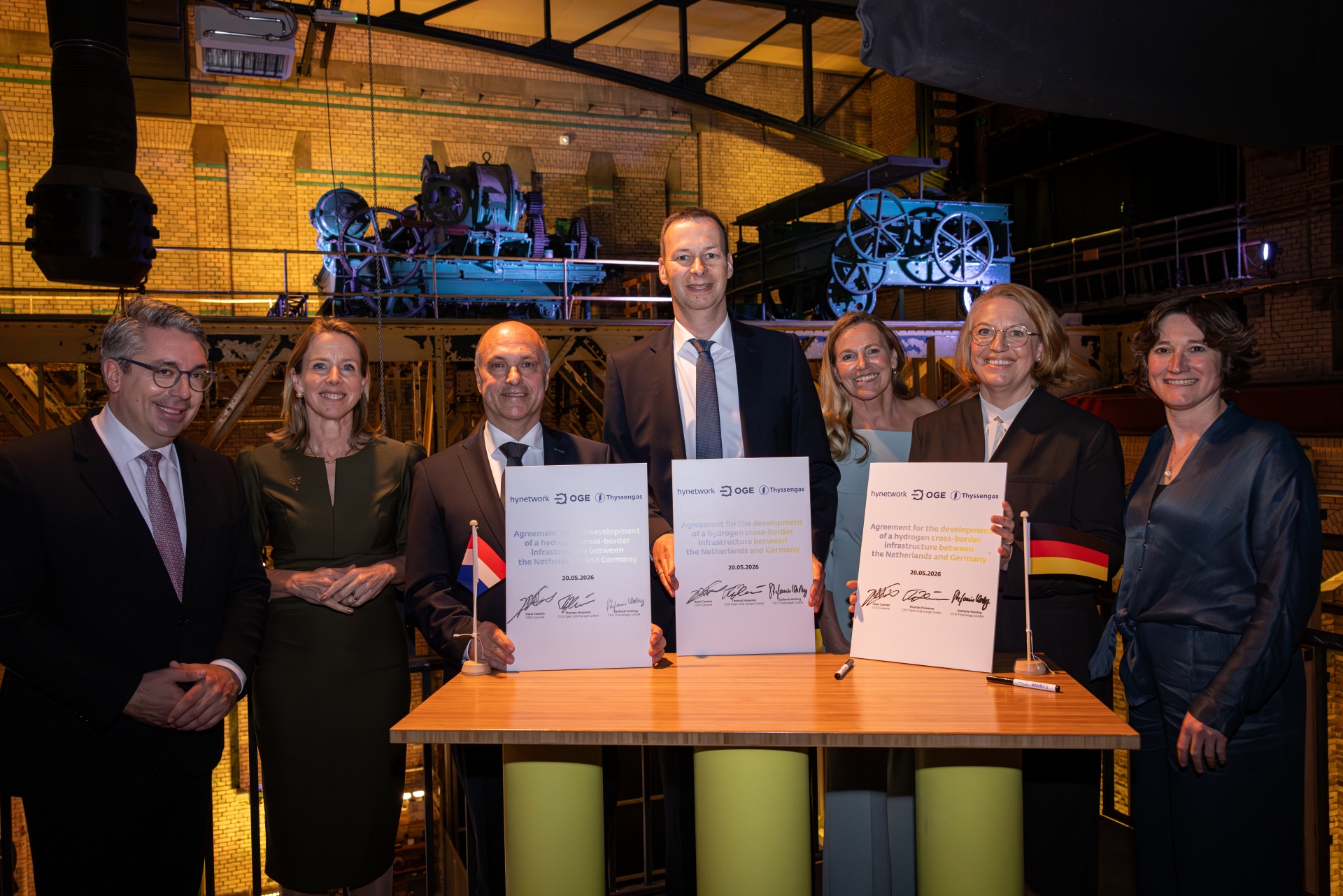
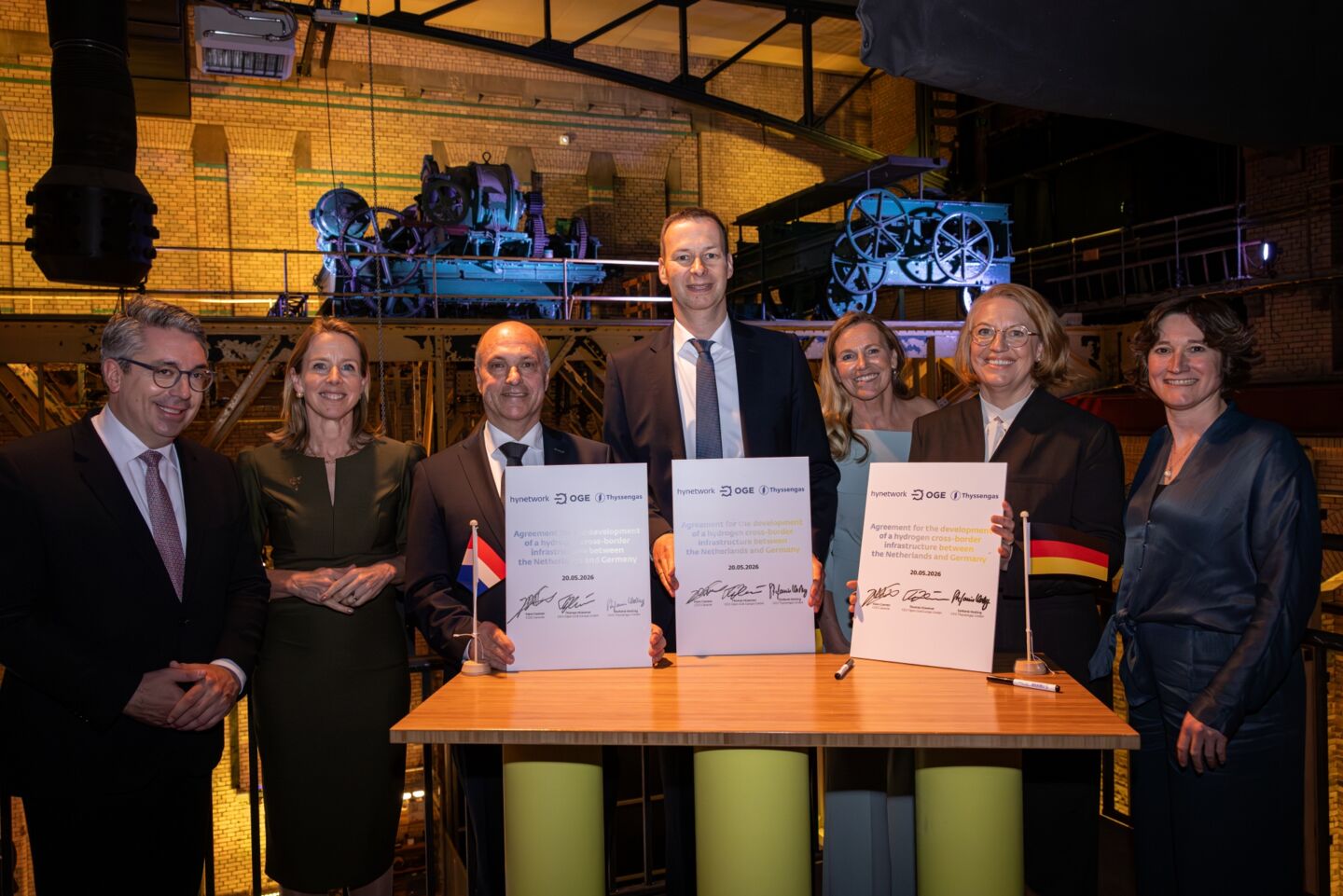
Gasunie and the German transmission system operators Open Grid Europe and Thyssengas signed an agreement to jointly develop a cross‑border hydrogen connection between the Netherlands and Germany. The two national hydrogen networks will be interconnected, making use wherever possible of existing natural gas pipelines that will be repurposed for hydrogen transport. The companies are aiming to realise the connection between Zevenaar (Netherlands) and Elten (North Rhine-Westphalia) around 2031.
The agreement was signed in the presence of Stientje van Veldhoven, the Dutch Minister for Climate and Green Growth and Stefan Rouenhoff, Parliamentary State Secretary at the Federal Ministry for Economic Affairs and Energy of Germany, at the “Hydrogen Milestone Ceremony” in Rotterdam. The event celebrated the completion of the first section of the Dutch hydrogen network by Gasunie. The signing underscores the shared ambition to develop large‑scale hydrogen infrastructure in North‑West Europe as an international system from the outset. The agreement was signed by Hans Coenen, COO of Gasunie, Thomas Hüwener, CEO of Open Grid Europe, and Dr. Stefanie Kesting, CEO of Thyssengas.
The Rhine-Ruhr region as a strategic demand centre
The Zevenaar-Elten border point is the strategic link connecting German industry and the chemical sector with hydrogen production, storage and import facilities in the Netherlands. According to the agreement, the first phase will focus on connecting the Rhine-Ruhr region, followed by the connection of southern locations such as Ludwigshafen. On the Dutch side, the Delta-Rhine Corridor plays a central role in this context as the connecting infrastructure between the Port of Rotterdam and the German hydrogen network.
From ambition to implementation
The Hydrogen Milestone Ceremony, held during the week of the World Hydrogen Summit, highlighted that the energy transition is entering a new phase: from ambition to implementation. With the completion of the first section of the hydrogen network in Rotterdam and the agreements on cross‑border hydrogen corridors, the foundations are being laid for further national and European connections. A European hydrogen system is essential to strengthen energy security, decarbonise European industry and deliver a robust, future‑proof energy system.
Dr. Thomas Hüwener, CEO of Open Grid Europe GmbH: “The energy transition requires strong European partnerships. The hydrogen corridor between the Netherlands and Germany is a key step toward jointly advancing security of supply, industrial competitiveness, and decarbonization. The fact that we can utilize existing infrastructure makes the ramp-up faster, more efficient, and economically viable.”
Dr. Stefanie Kesting, CEO Thyssengas: “Through this cross-border cooperation, Gasunie, Thyssengas and OGE are strengthening the link between regional hydrogen demand and European infrastructure. The interconnection point between Zevenaar and Elten will enable cross-border transport from the Dutch import port of Rotterdam to the Rhine-Ruhr region. In this way, we are making a significant contribution to decarbonisation and the future energy security of Europe, as well as to the resilience of industry and small and medium-sized enterprises in north-western Germany.”